
Table of Contents
Rain Garden Design in Langley, British Columbia
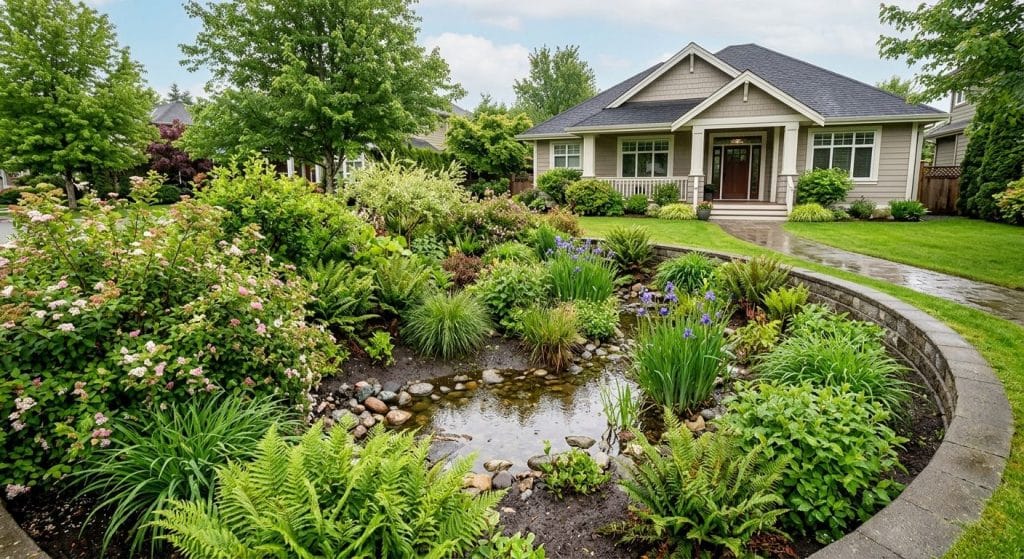
Rain gardens are a functional and beautiful solution for managing stormwater in the Fraser Valley. By creating a shallow depression planted with specific vegetation, homeowners can help filter pollutants and reduce the strain on municipal drainage systems.
Preparing for Your Rain Garden Project
Proper rain garden design in Langley BC begins with careful preparation to ensure your garden effectively manages stormwater and thrives in our local climate. Effective planning prevents costly mistakes and maximizes the environmental benefits of your outdoor space. Follow these key steps to get started:
- Evaluate your property’s drainage patterns and soil type by observing how water flows during rainfall. Conduct a percolation test if your soil appears heavy or clay-rich.
- Select native rain garden plants in Langley BC that handle both wet and dry conditions, such as rhododendrons, azaleas, and other hardy flora suited to the Fraser Valley.
- Determine the ideal size and location based on roof downspouts, the total catchment area, and your landscape’s natural contours.
- Check local municipal regulations—property owners are responsible for verifying permit requirements with the relevant Langley authorities before any excavation.
- Consult a professional for expert grading and plant layout. Hughes landscaping in Langley offers comprehensive landscape design services that streamline the planning process.
At Hughes Landscaping, our experienced team can assist with every step of the preparation process, ensuring your vision aligns with practical, site-specific solutions. With a solid plan in place, you’ll be ready to move on to rain garden installation in Langley BC, which we’ll explore in the next section.
Select the Ideal Location for Your Rain Garden
Once you understand the benefits of a rain garden, the next step is selecting the ideal location. Effective rain garden design in Langley BC begins with choosing the right spot to ensure proper drainage and plant growth.
- Provincial guidelines from British Columbia recommend placing rain gardens at least 10 feet from foundations, where downspouts capture half your roof runoff; test soil drainage: a 6-inch hole should drain at least 1 inch per hour.
- Choose a spot with 4–6 hours of sun daily for rain garden plants in Langley to flourish, and amend clay soils with sand and compost.
- Avoid utilities and tree roots; call BC One Call before digging. A gentle slope works if you level the base.
Once you’ve identified the ideal location, proper rain garden installation in Langley BC ensures your design thrives.
For a garden that embodies Landscaping That Makes Your Yard Look Effortlessly Beautiful, request our landscape design services; free quotes are subject to onsite inspection.
Assess Your Soil’s Drainage Capacity
Once you have chosen the ideal spot for your rain garden, the next critical step is to assess your soil’s drainage capacity. Proper drainage is essential for a successful rain garden design in Langley BC, as it determines how well your garden will capture and filter runoff. Poor drainage causes water pooling and root rot. By testing your soil, you can ensure your rain garden performs effectively, whether you plan to install it yourself or rely on our professional landscape services.
A simple percolation test can help: dig a 12-inch-deep hole, fill with water, and measure the drop per hour. Optimal drainage is 1–2 inches per hour. Clay soil drains slowly and may need amendments; sandy soil drains too fast; silt retains moderate moisture. Test in several spots after a recent rain for realistic results. We offer professional soil evaluation for rain garden installation in Langley BC, helping you select the right rain garden plants in Langley and any needed amendments. Proper drainage is a vital step in green infrastructure planning in British Columbia, supporting sustainable stormwater management. Contact us for a free quote—our professional landscape services are competitively priced. Free quotes/estimates are subject to onsite inspection and may change after assessment.
Determine the Garden Size and Depth
When planning your rain garden design in Langley BC, the next step after choosing a location is determining the garden’s size and depth. Begin by calculating the total drainage area (roof, driveway, lawn) that will direct runoff into the garden. For Langley’s clay-heavy soils, increase the garden’s surface area by 20–30% to compensate for slow infiltration. Also, maintain at least 10 feet from building foundations and 5 feet from property lines.
Rain gardens typically measure 6 to 12 inches deep, with deeper basins for large drainage areas or slow-draining soils. Include a 6-inch ponding area above the mulch to temporarily hold stormwater. Better Ground emphasizes matching plant root depths to each zone; consult our native plant selection rain garden guide for species recommendations.
In Langley, heavy winter rainfall and clay soil make proper sizing essential. Selecting rain garden plants for Langley helps species thrive. For expert rain garden installation in Langley BC, we evaluate your site’s soil and slope. Results may vary based on your property’s drainage characteristics.
Choose Native Plants for Your Rain Garden
Once you’ve planned your rain garden layout, the next key decision is selecting the right plants for it. Choosing the best rain garden plants langley homeowners rely on means focusing on native plants. These species develop deep root systems, tolerate standing water, and adapt perfectly to the Lower Mainland’s climate.
According to environmental organization Better Ground, several native plants thrive in rain gardens across the Fraser Valley. We recommend these species:
- Swamp Milkweed – attracts butterflies and handles wet zones
- Blue Flag Iris – adds vibrant color and thrives in moist soil
- Red Osier Dogwood – stabilizes slopes and supports local wildlife

Native plant icons for eco-friendly rain gardens
Hughes Landscaping offers professional planting services, helping you choose the right rain garden plants langley while managing your rain garden design langley bc and rain garden installation langley bc needs. We provide competitive, affordable rates and CNLA-backed expertise. Results may vary depending on site conditions, weather, and maintenance. Let’s Elevate Your Outdoor Living.
Excavate and Shape the Rain Garden Basin
With your rain garden design in Langley BC finalized, it’s time to move the plan to the ground. We begin by marking the basin outline on the ground with stakes and string, precisely following the approved layout.
- We excavate the basin to the specified depth of 30-60 cm, accounting for extra depth to accommodate soil amendments and a 2-5% bottom slope that directs water toward the infiltration area.
- The sides are shaped with a gentle 3:1 slope, which prevents erosion and provides safe access for ongoing maintenance—a crucial step for any rain garden installation in Langley BC.
- We lightly compact the basin floor with a hand tamper to create a stable base without sealing the native soil.
- Excavated soil is used to build a low berm on the downhill side; we tamp it firmly to control the direction of any overflow.
- If the design specifies, we line the basin with non-woven geotextile fabric and secure it with landscape pins—commonly recommended for Langley’s clay-loam subsoils to maintain pore space for rain garden plants in Langley.
Once the basin is shaped and compacted, you are ready to install the overflow system and select your plants—both covered in the following steps.
Install the Rain Garden with Proper Grading
Once you’ve finalized your rain garden design in Langley, BC, the next step is installation with precise grading. Proper grading and soil preparation are essential to capture runoff and prevent standing water on your property. For a successful rain garden installation in Langley, BC, follow these practical steps based on our team’s drainage expertise.
- We recommend excavating the basin 15–30 cm deep, at least 3 m from building foundations, with a flat or slightly concave bottom to promote infiltration.
- Grade a 2–5% slope from the inlet side toward the centre to guide water flow.
- For Langley’s clay soils, mix a 2:1 ratio of sand to native soil into the excavated area to improve percolation.
- Test drainage by filling the basin with water and confirming it drains within 24 hours; if water remains, further soil amendment may be needed.
After grading, the basin is ready for rain garden plants in Langley, BC. Contact us for a free quote on professional landscape services.
Add Mulch and Final Touches
Finishing a rain garden design in Langley BC requires a final layer of mulch and a few essential finishing touches. We apply shredded hardwood bark or cedar mulch at a depth of 2 to 3 inches, taking care to keep it away from plant stems to prevent rot. This organic mulch helps your rain garden plants in Langley retain moisture, suppresses weeds, and—as discussed in our blog on rubbish buildup—prevents debris from accumulating in your landscape.
Once the mulch is in place, we add clean edging with stone or metal to define the garden, remove any excess soil or stray debris, and give the entire installation a gentle watering to settle everything. The result is a polished, durable finish that delivers Landscaping That Makes Your Yard Look Effortlessly Beautiful. For expert rain garden installation in Langley BC and long-term maintenance, contact Hughes Landscaping Services for a free quote (subject to onsite inspection).
Addressing Common Rain Garden Issues
After your rain garden is installed, it’s important to monitor for common issues. Here are the most frequent problems and how to address them. Proper rain garden design in Langley BC can prevent many of these challenges, but even well-planned gardens may require attention. Fortunately, most issues are manageable with the right approach and a little know-how.
One common concern is standing water that lingers beyond 24–48 hours. This often points to poor drainage or an undersized design. We recommend checking the soil infiltration rate and adjusting the inlet or overflow structure if necessary. In many cases, amending the soil blend to meet the specifications outlined in the Province of British Columbia’s Green Infrastructure and Water Centric Planning guide will restore proper function. Paying attention to these details early on can save considerable effort later.
Plant health is another frequent pain point. Rain garden installation in Langley BC succeeds best when you select species that thrive in both wet and dry periods—conditions typical of our Fraser Valley climate. Native plants are ideal because they are adapted to local soil and rainfall patterns. When choosing rain garden plants in Langley BC, look for options like red-osier dogwood, sword fern, or sedges. These resilient plants not only tolerate fluctuating moisture but also help filter runoff and stabilize the basin.
Erosion near inlets or along the edges can undermine the garden’s performance. We find that applying a layer of shredded hardwood mulch, maintaining a gentle slope, and keeping overflow paths clear prevents most erosion. The BC government’s guide emphasizes that proper slope grading and dense planting are key to long-term stability.
Regular maintenance is the best defense against recurring problems. Remove fallen leaves and debris, check for sediment buildup around the inlet, and prune plants as needed—especially after heavy rain. By following these best practices and the Province’s guidelines, you’ll keep your rain garden healthy and functional for years to come.
Enjoy the Lasting Benefits of Your Rain Garden
Once our team at Hughes Landscaping has completed your rain garden design and installation, you’ll quickly discover the long-term rewards it brings. A well-planned rain garden design in Langley, BC, becomes a sustainable, beautiful asset that manages stormwater while enhancing your outdoor space.
Your new garden captures and filters runoff, reducing local flooding risk and preventing erosion. Choosing the right rain garden plants in Langley, BC, naturally purifies water by trapping pollutants in the soil, and the blooms attract butterflies and birds, boosting backyard biodiversity. Over time, you’ll appreciate a landscape that needs far less watering and upkeep than traditional lawn.
Beyond practical function, a professionally installed rain garden increases curb appeal and can add lasting property value. With thoughtful rain garden design in Langley, BC, you’ll spend less time on chores and more time enjoying your yard. Request your free onsite quote from Hughes Landscaping today — let’s elevate your outdoor living.