If your yard stays soggy from November to March, you have probably heard two fixes suggested: a French drain or a catch basin. Choosing a French drain in Chilliwack, or a catch basin, depends on three things: your soil, your slope and how high the groundwater sits. This guide explains how each one works and gives you a simple decision table to start with.
Homes on the valley floor near the Fraser River face a particular challenge. When the ground is already full of water, a drain that works well on a hillside can struggle on a flat lot.
How a French Drain Works
A French drain is a trench filled with clean, washed gravel, usually with a perforated pipe at the bottom. Water soaks into the gravel, enters the pipe through its small holes and flows downhill to an outlet. Our landscaping glossary covers drain rock and perforated drain pipe if the terms are new to you.
What it is good at
French drains collect water spread across an area, such as a soggy strip of lawn, seepage coming down a slope, or wet soil along a path. They work below the surface, so the lawn or garden can go back over the top.
Where it struggles
The pipe needs a steady fall to a lower outlet. On a dead-flat lot with groundwater near the surface, the trench can fill with water that has nowhere to go. Fine clay and silt can also clog the gravel over time if the trench is not wrapped in filter fabric.
How a Catch Basin Works
A catch basin is a box set into the ground with a grate on top. Surface water pours in through the grate, debris settles in the bottom, and a solid pipe carries the water away.
What it is good at
Catch basins handle water that collects in one low spot, such as a dip in the lawn, the bottom of a driveway or a corner of a patio. They are good at moving a lot of surface water quickly during a heavy downpour.
Where it struggles
A catch basin only collects water that reaches the grate. It does little for soil that stays saturated underground, and the sump needs cleaning out so leaves and silt do not block it.
Catch Basin vs French Drain: The Key Differences
The catch basin vs french drain question is really about where your water is. Surface water that pools in one spot points toward a catch basin. Water that soaks through the ground across a wider area points toward a French drain.
Many yards end up with both. A catch basin can collect surface water at a low point, while a French drain picks up seepage nearby, with both feeding the same outlet pipe.
Decision Table: Soil, Slope and Water Table
Use this table as a starting point, not a final answer. Every property is different, and a site visit is the best way to confirm.
| Site condition | French drain | Catch basin | Worth considering |
|---|---|---|---|
| Heavy clay, water pools on top | Can help, but clay drains slowly and fines can clog gravel | Good for collecting the pooled surface water | Regrading plus a catch basin at the low point |
| Sandy or gravelly soil | Often works well, since water moves freely | Useful where hard surfaces shed water | Often the simplest site to drain |
| Peat or silt on the valley floor | Possible, but soft ground and fines need careful design | Good for surface water from roofs and patios | Raised beds and grading to lift key areas |
| Gentle to moderate slope | Good for intercepting seepage across the slope | Good at the bottom of the slope | Both, feeding one outlet |
| Steep hillside lot | Good behind and above walls | Useful at the base | Terracing with retaining walls that include drainage |
| Flat lot, little fall to an outlet | Hard to get enough slope in the pipe | Works if there is a lower outlet | A site visit to find a workable outlet first |
| High water table, soggy all winter | Limited, because the groundwater has nowhere to go | Handles surface water only | Raising grades, raised beds and wet-tolerant planting |
What Makes Fraser River Properties Different
Low-lying parts of Chilliwack, such as areas around Rosedale, Greendale and the valley floor near the river, can have groundwater close to the surface in the wet months. That changes the drainage picture.
Soil type matters
Oregon State University Extension notes that finer soils with more clay drain more slowly and leave more water on the surface, while sandier soils drain faster and stay saturated for shorter periods. It also points out that compacted soil drains more poorly. Chilliwack soils range from heavy clay to silt and peat, sometimes on the same street.
The outlet is everything
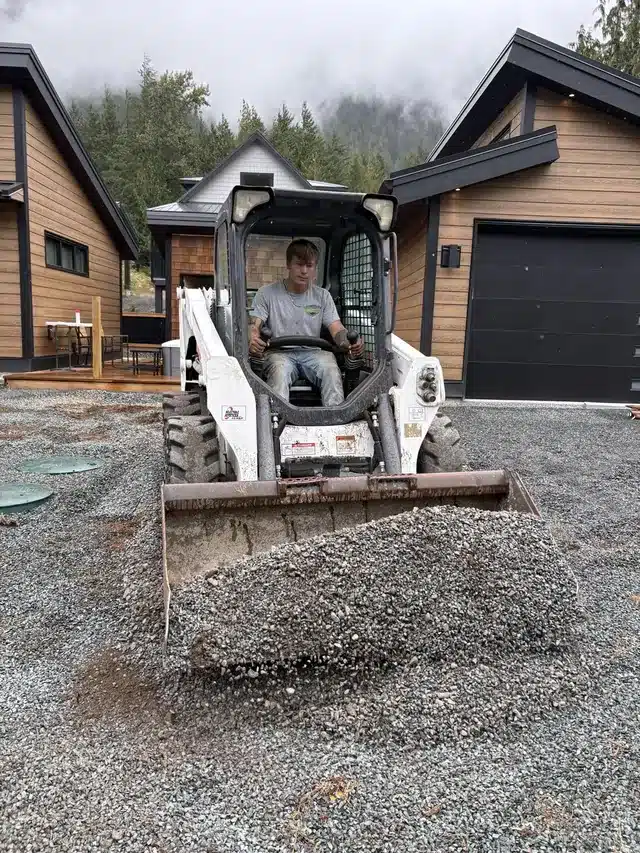
A drain only works if the water has somewhere lower to go. On a flat, wet lot that outlet can be hard to find, and the water must not be sent onto a neighbour’s property. Check the City of Chilliwack’s current rules before connecting anything to the street or storm system.
Sometimes the answer is up, not down
When the water table is high, digging deeper does not always help. Raising the grade in key areas, building raised planting beds or choosing plants that tolerate wet feet can work better than fighting the groundwater.
Quick Checks Before You Decide
You can learn a lot in an afternoon, ideally during or right after heavy rain.
- Note where water sits and whether it arrives from the surface or seeps up from below.
- Dig a test hole in a soggy spot and see whether water slowly fills it from the sides.
- Check that gutters and downspouts empty well away from the house.
- Look for a lower point on your property where water could safely go.
- Take photos so you can show a professional what you see.
Our earlier post on backyard drainage in Chilliwack covers more causes of pooling and the quick fixes to try first.
Planning Drainage as Part of the Whole Yard
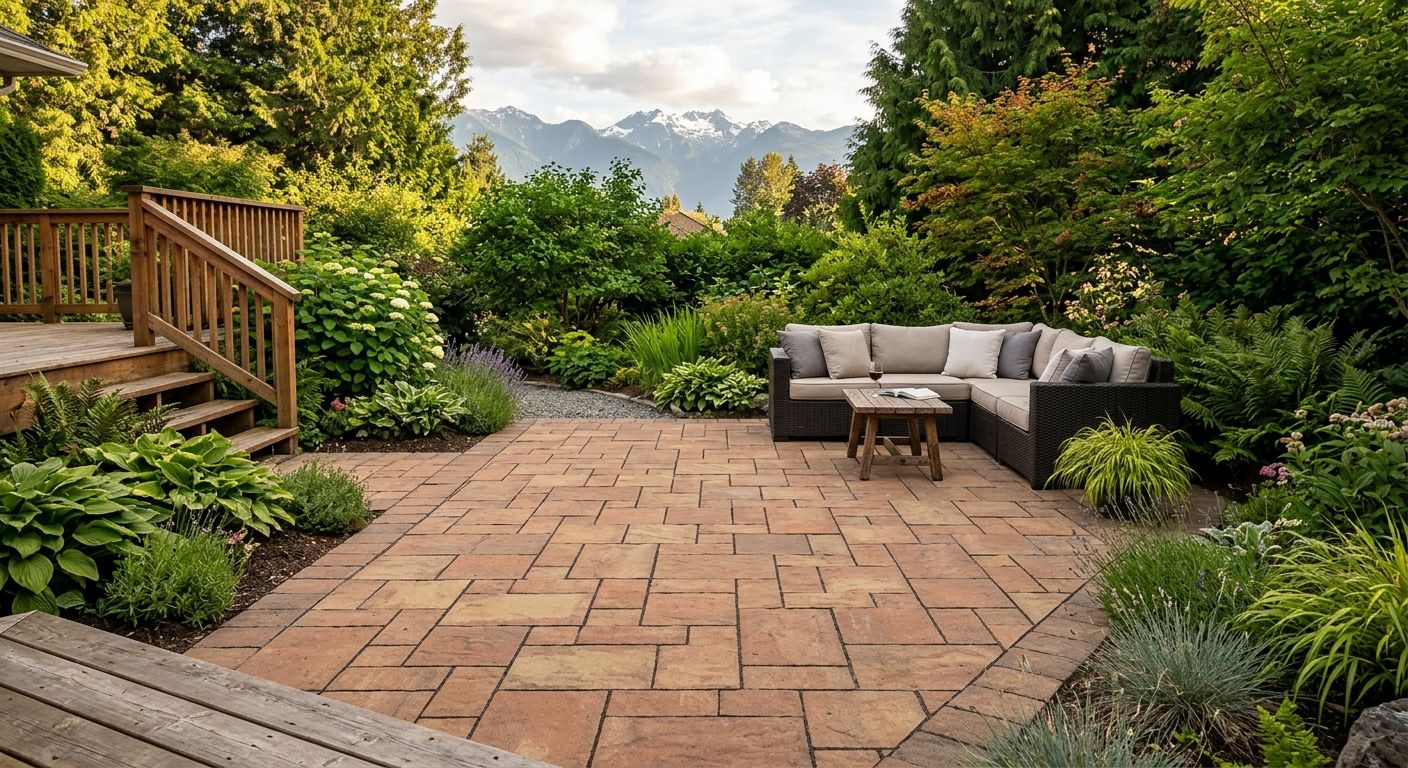
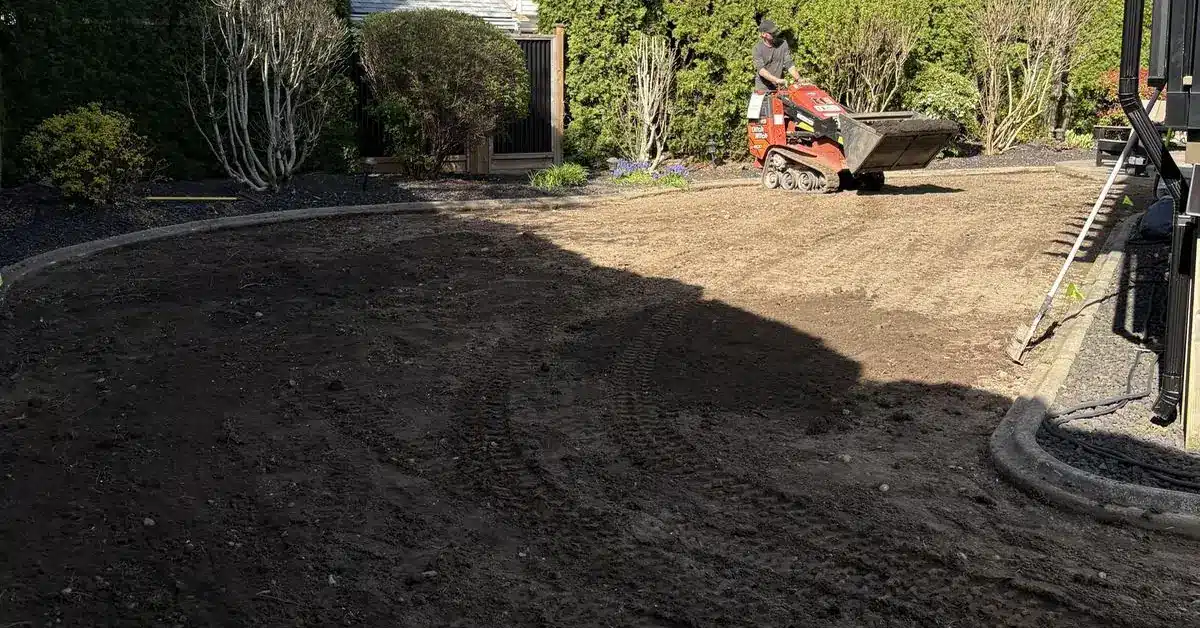
Drainage works best when it is planned before patios, lawns and beds go in. A landscape design starts with grading, so water moves away from the house and toward a sensible outlet from day one.
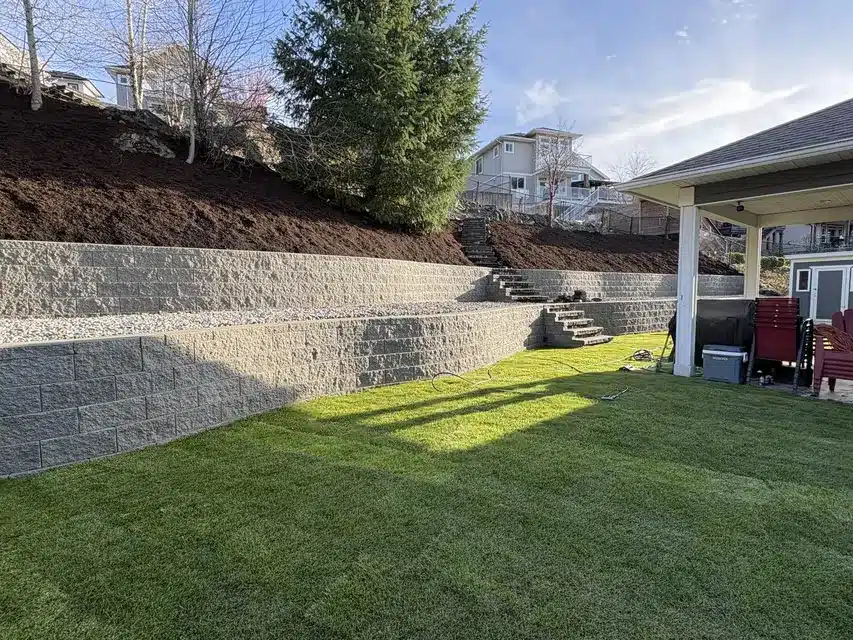
On hillside lots in Promontory and Ryder Lake, retaining walls turn a slope into level terraces. Drain rock and perforated pipe behind the wall are part of building it properly, because trapped water puts pressure on the wall.
When to call in help
Get a professional involved if water reaches the foundation, a crawl space or a basement, or if the same areas flood every year. For anything involving the house itself, bring in the right specialist, and we can plan the landscape side around their work.
FAQ
What is the difference between a French drain and a catch basin?
A French drain is a gravel trench, usually with a perforated pipe, that collects water soaking through the ground across an area. A catch basin is a box with a grate that collects surface water at one low spot and sends it away through a solid pipe.
Will a French drain work in Chilliwack clay soil?
It can, but clay drains slowly and fine particles can clog the gravel over time. In heavy clay, regrading and collecting surface water at low points often matter just as much. A site visit is the best way to know.
Does a French drain work with a high water table?
Often not very well on its own. If the groundwater is already near the surface and there is no lower outlet, the trench can simply fill with water. Raising grades, raised beds and wet-tolerant planting may work better.
Where should a French drain or catch basin drain to?
To a lower point where the water can go safely, never onto a neighbour’s property. Check the City of Chilliwack’s current rules before connecting anything to the street or storm system.
Can I use a catch basin and a French drain together?
Yes. Many yards use a catch basin at the low point for surface water and a French drain nearby for seepage, with both feeding the same outlet pipe.
Not sure what your yard needs? Tell us where the water sits and we will walk the property with you, look at the soil and slope, and explain your options.
Free on-site design consultation. Open 24/7. Call 604-807-4951