When a big Pacific storm parks itself over the valley, some backyards turn into ponds overnight. If your lawn squelches for days after every downpour, you have a backyard drainage problem, and in Chilliwack it is one of the most common issues we see. The good news is that most pooling has a clear cause and a practical fix.
This guide covers why water collects, what you can check yourself, and when it is time to get a drainage plan in place.
What an Atmospheric River Does to Your Yard
An atmospheric river is a narrow band of heavy, moisture-laden air that comes in off the Pacific. According to the B.C. government, these storms are common in British Columbia, with many arriving every year, most often in the fall and early winter.
They deliver a lot of rain in a short time, often on ground that is already wet. That is exactly when a yard’s weak spots show up.
Why yard pooling after an atmospheric river lasts so long
Yard pooling during an atmospheric river happens when rain falls faster than the soil can absorb it and the water has nowhere else to go. Once the ground is saturated, every extra millimetre just sits on top. Without a path off the property, it can stay there for days.
Keep an eye on the forecast
Environment Canada issues rainfall warnings when heavy rain is on the way. Check the Chilliwack forecast and use the dry days beforehand to clear drains and downspouts.
The Most Common Causes of Backyard Drainage Problems in Chilliwack
Chilliwack soils range from heavy clay to silt and peat, and lots vary from flat valley-floor subdivisions to steep hillsides. Most pooling comes down to one or more of these causes.
| Cause | What you’ll notice | Typical fix |
|---|---|---|
| Heavy clay soil | Water sits on the surface for days | Soil improvement, raised beds, subsurface drainage |
| Poor grading | Water flows toward the house or collects mid-lawn | Regrading so the ground slopes away |
| Downspouts dumping close by | Soggy patches right next to the house | Extend or redirect downspouts |
| Compacted soil | Puddles on paths and play areas | Aeration, new topsoil, better surfaces |
| Runoff from a slope | Mud and water at the bottom of a bank | Terracing, retaining walls, drainage behind walls |
| Blocked drains | Water backs up at catch basins | Clear leaves and debris |
Clay soil
Clay holds water and drains slowly, so even a gentle hollow can hold a puddle for a long time. Many newer lots also have a thin layer of topsoil over compacted fill, which makes it worse.
Grading
Grading is simply the shape of the ground. If a yard is flat or slopes toward the house, water has no reason to leave. Our landscaping glossary explains grading and other drainage terms in plain language.
Downspouts and hard surfaces
Roofs, patios and driveways shed a surprising amount of water. The City of Chilliwack describes stormwater as rain and snowmelt that flows over roofs, roads and other hard surfaces, and if that runoff ends up in your lawn, the lawn floods.
Quick Checks You Can Do This Weekend
Before you spend money, do a little detective work. The best time is during or right after heavy rain.
- Walk the yard in a rain jacket and note where water collects and where it comes from.
- Check that gutters are clear and downspouts empty well away from the house.
- Look at the street catch basin and clear leaves off the grate if it is safe to do so.
- Push a shovel into the soggy spots. Sticky, grey clay a few centimetres down is a big clue.
- Take photos. They help a lot when you talk to a landscaper later.
Fixes for Yard Pooling That Actually Work
There is no single cure for drainage. The right fix depends on your soil, the slope and where the water can legally and safely go.
Regrade the yard
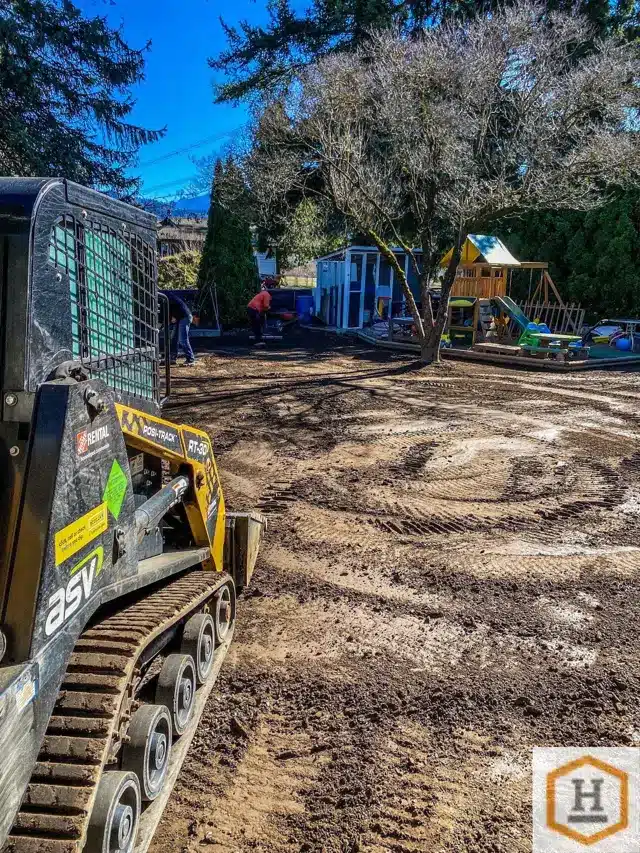
Reshaping the ground so it slopes gently away from the house is often the first step. It can mean removing a low spot, building up an area, or creating a shallow swale to carry water to a better place.
Add subsurface drainage
Where surface fixes are not enough, gravel trenches with perforated pipe, or catch basins tied into a proper outlet, can move water underground. Where that water ends up matters, so it needs to be planned with your site and local rules in mind.
Improve the soil and the surfaces
Adding quality topsoil, aerating compacted lawn and raising planting beds above soggy ground all help. Choosing the right base under patios and walkways also keeps them from turning into puddles.
Terrace slopes with retaining walls
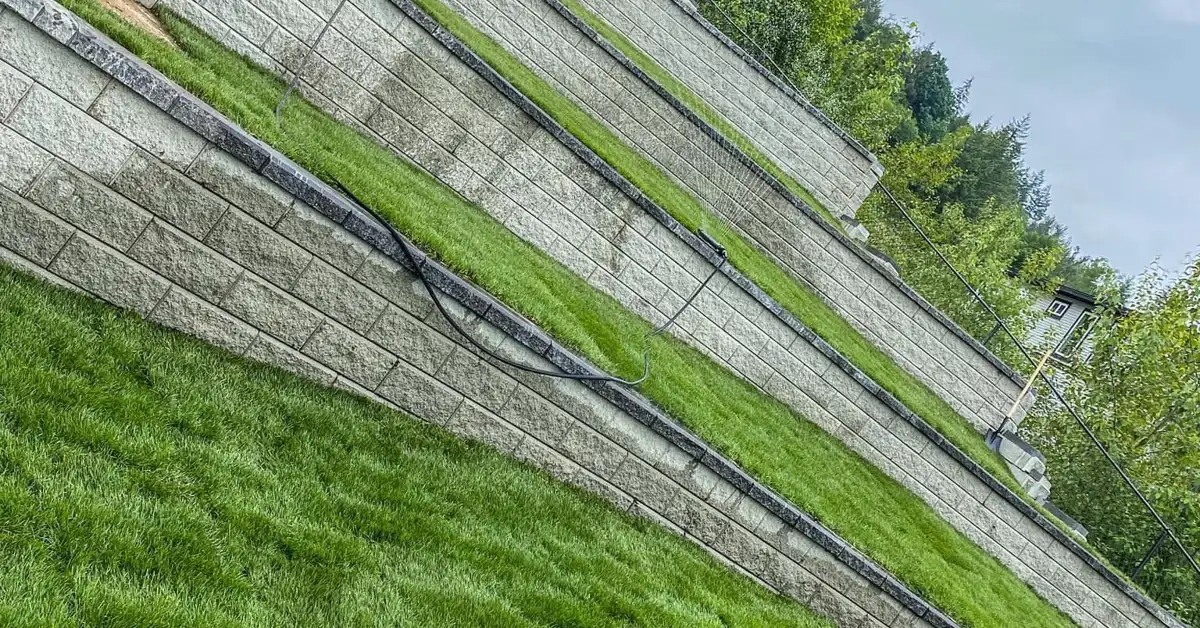
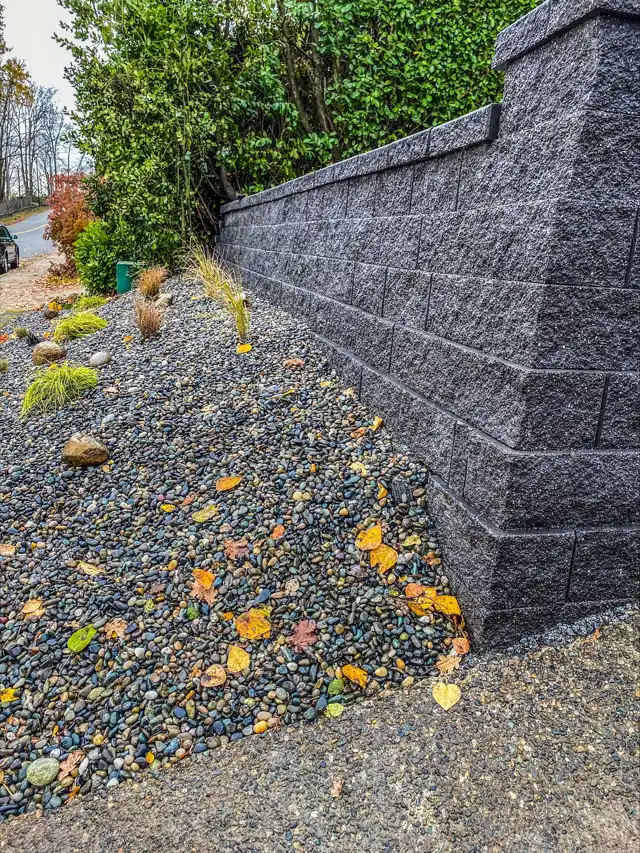
On hillside lots in Promontory and Ryder Lake, water and soil both head downhill. Retaining walls break a steep slope into level terraces, and building in drainage behind the wall is a key part of keeping them sound.
Why a Drainage Plan Beats Patching
It is tempting to dig one trench or dump some gravel and hope. Piecemeal fixes often just move the water to a new problem spot, sometimes onto a neighbour’s property.
A landscape design looks at grading and drainage first, so water moves away from the house before patios, lawn and beds go in. That way the whole yard works together, and you can build it all at once or in stages.
Built for Chilliwack conditions
A design copied from a coastal city yard will not necessarily work here. Our winters are long and wet, and soils change from street to street. We have been working in Fraser Valley yards for 15+ years, so we plan around those conditions from the start.
When to Call for Help
Some pooling is a quick DIY fix. Other situations need a proper site visit.
Call sooner rather than later if:
- Water is collecting against the foundation or getting into a crawl space or basement.
- The same areas flood after every storm, year after year.
- Soil is washing off a slope onto paths, the driveway or a neighbour’s yard.
- You are planning a patio, lawn or new planting in an area that stays wet.
For anything involving the house foundation or a large slope, get the right professional involved, and we can work alongside them on the landscape side.
FAQ
Why does my backyard flood every time it rains in Chilliwack?
Most often it is a mix of heavy clay soil, flat or poorly graded ground, and downspouts or hard surfaces sending water into the lawn. When the soil is already saturated, new rain has nowhere to go and pools on the surface.
What is an atmospheric river?
An atmospheric river is a narrow band of heavy, moisture-laden air coming in from the Pacific. In British Columbia they are common, with many every year, most often in the fall and early winter, and they can drop a lot of rain in a short time.
How can I stop yard pooling during an atmospheric river?
Before the storm, clear gutters, downspouts and the street catch basin. For a lasting fix, address the cause with regrading, subsurface drainage, soil improvement or terracing, depending on your yard.
Is a French drain the answer for backyard drainage in Chilliwack?
Sometimes. Gravel trenches with perforated pipe work well in some yards, but the water still needs a proper outlet. A site visit is the best way to know whether drainage pipe, regrading or another fix suits your property.
How much does it cost to fix backyard drainage?
It depends on the size of the area, the soil, how much regrading is needed, access for equipment and whether pipe, catch basins or retaining walls are involved. A free on-site consultation is the best way to understand the factors for your yard.
A soggy yard is fixable. Tell us where the water sits and we will come out, walk the property with you and explain your options.
Free on-site design consultation. Open 24/7. Call 604-807-4951