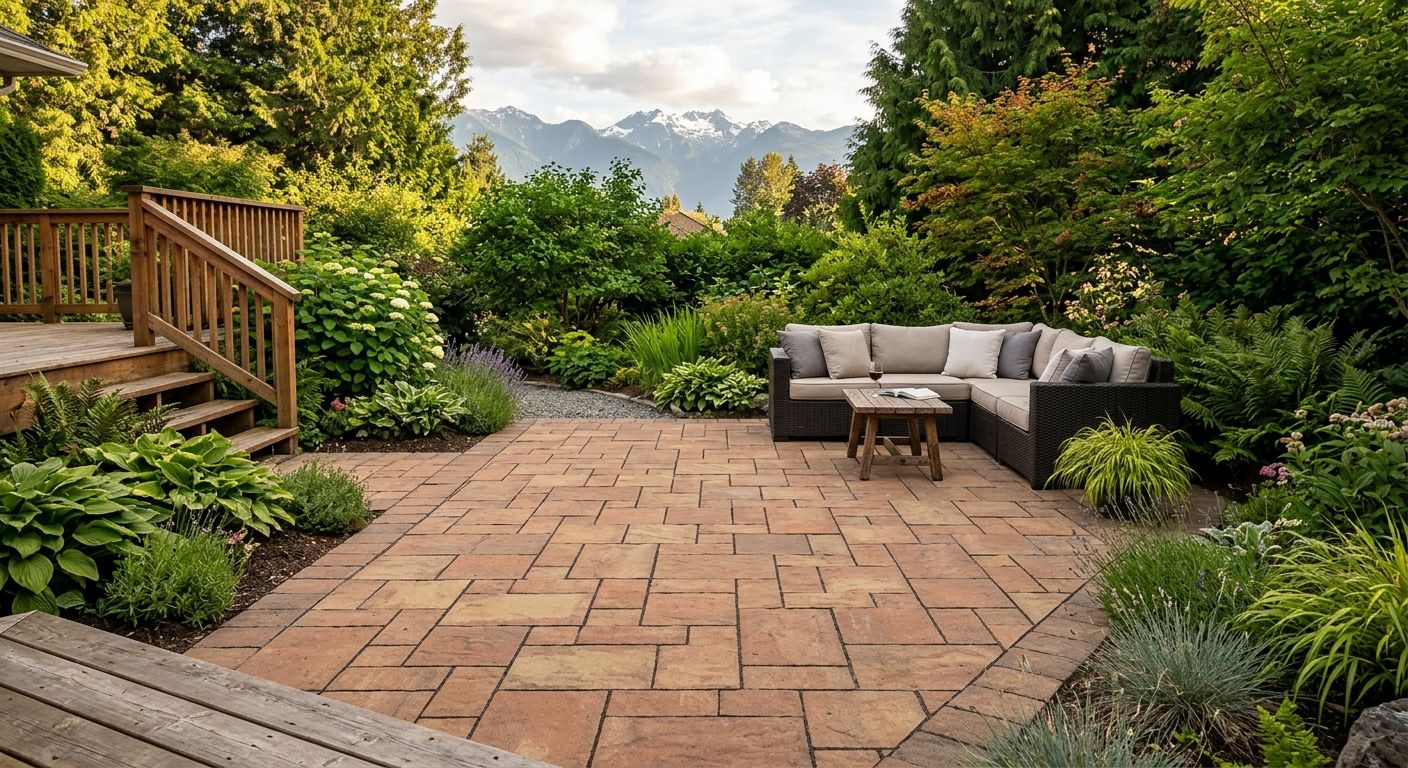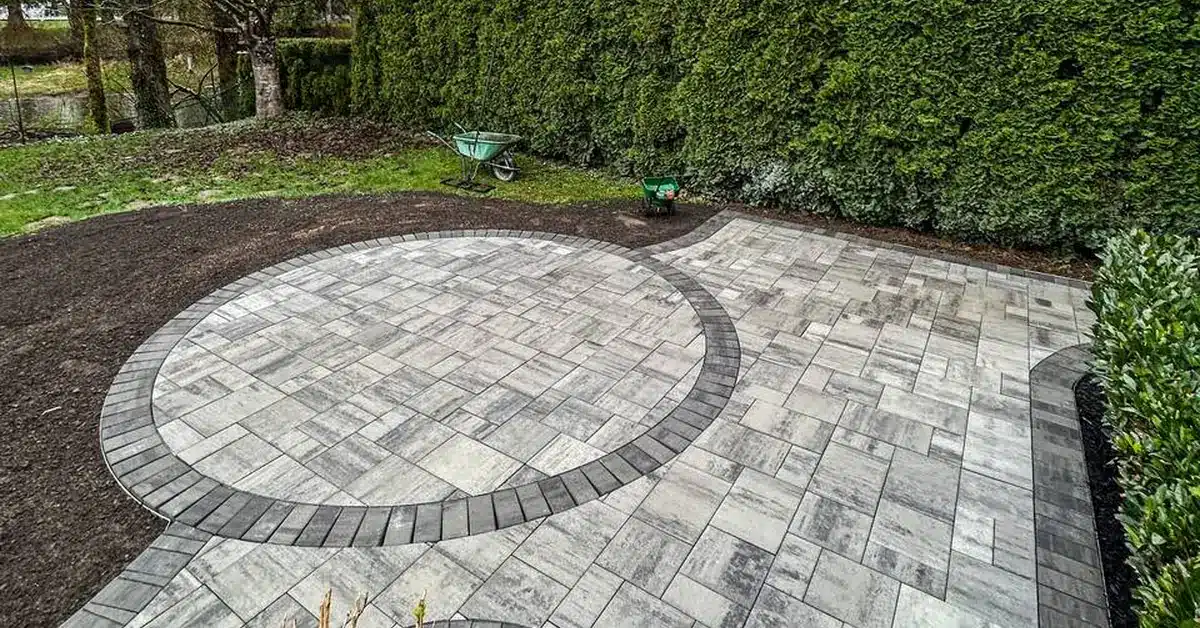
Most people pick a patio by the stone. The colour, the pattern and the border get all the attention. But what really decides whether that stone stays flat is the paver base. Chilliwack clay can turn a weak one soggy after the first wet winter.
This guide explains what sits under a paver patio or walkway, why heavy local soil holds water, and how an open-graded aggregate base helps keep the layers dry.
Why the Base Matters More Than the Stone
Pavers are only the top few centimetres of the job. Everything that keeps them level is underneath.
When a patio sinks at one corner, rocks underfoot or puddles against the house, the stone is rarely the cause. The trouble almost always starts in the layers below, as we explain on our paver patios page.
What a failing base looks like
- Low spots that hold water after rain
- Pavers that shift or rock when you step on them
- Joints opening up, with weeds and ants moving in
- Edges spreading away from the lawn or planting beds
- Heaving after a cold snap, then settling unevenly in spring
The Problem With Chilliwack Clay
Much of Chilliwack sits on heavy clay, silt and, in low areas, peat. These soils hold water rather than letting it drain away.
Dig a hole on a Sardis or Greendale lot in November and it may fill with water and stay full for days. Put a patio on top of that without a plan, and the water has nowhere to go.
Water trapped under the pavers
Rain runs through the joints and down into the base. If the base or the soil below cannot shed that water, it sits there. Saturated soil is soft, and soft soil lets the layers above it sink.
Freeze-thaw makes it worse
The Fraser Valley crosses the freezing point many times each winter. Water held in a soggy base freezes, expands and lifts the pavers, then thaws and lets them drop. Over a few seasons that cycle leaves an uneven surface.
Paver Base, Chilliwack Clay and the Layers Underneath
A properly built patio or walkway is a stack of layers, each with its own job. Here is how they fit together, from the bottom up.
| Layer | What it is | Its job |
|---|---|---|
| Subgrade | The native soil left after digging out | Supports everything; compacted and shaped to slope |
| Fabric or geogrid | A filter fabric, a stabilizing grid, or both | Keeps clay out of the stone; helps spread the load |
| Base | Crushed angular stone, placed and compacted in layers | Carries weight and moves water away |
| Bedding layer | A thin, screeded layer of fine material | Sets the final height for the pavers |
| Pavers and joints | The stone plus jointing sand | The surface you see and walk on |
| Edge restraint | Rigid edging along the sides | Stops the pavers spreading apart |
Several of these terms, like bedding layer and edge restraint, are defined in plain language in our landscaping glossary.
Excavation depth
How deep to dig depends on the soil, the slope and what the surface will carry. Unilock’s guide to building an open-graded base gives typical excavation depths for patios, walkways and driveways, with deeper digs for anything that takes vehicle traffic.
Compaction at every step
The soil is compacted before anything goes on it. Then the base goes in layers, with each layer compacted before the next. Skipping this is the fastest way to a patio that settles.
What Is an Open-Graded Aggregate Base?
Traditional paver bases use crushed gravel with fines, the small sand and dust particles that pack tight when compacted. That makes a firm base, but it also slows water down.
An open-graded aggregate base uses clean, angular crushed stone with the fines removed. The gaps between the stones stay open, so water can move through and out rather than sitting in the base.
Why angular stone matters
Round river rock rolls and shifts under load. Angular, crushed stone locks together when it is compacted, so the base stays firm even without fines binding it.
Pairing it with the bedding layer
The bedding layer on top usually matches the base. A clean, fine chip over an open base lets water keep moving down instead of getting trapped in a sandy layer just under the stone.
Open-Graded vs Traditional Base on Clay
Neither base is right for every yard. The table below shows the trade-offs.
| Open-graded base | Traditional base (with fines) | |
|---|---|---|
| Drainage through the base | Fast; water moves through the gaps | Slower; fines hold water |
| Compaction | Locks up quickly | Needs more passes and careful moisture |
| Working in wet weather | More forgiving in rain | Harder when it is soaked |
| Separation from clay | Fabric is important to keep soil out | Still benefits from fabric on soft soils |
| Where the water goes | Must have a planned outlet | Mostly runs off the surface |
The catch: water still needs somewhere to go
An open base drains quickly, but on clay the soil underneath may not absorb that water. Without an outlet, the base can turn into a stone-filled bathtub.
That is why slope, grading and sometimes a perforated drain pipe at the low edge are part of the design. The water has to leave the base, not just pass into it.
Building It Right in the Fraser Valley
Good patios and walkways on local soil follow the same order of work.
- Measure the space and plan the slope away from the house.
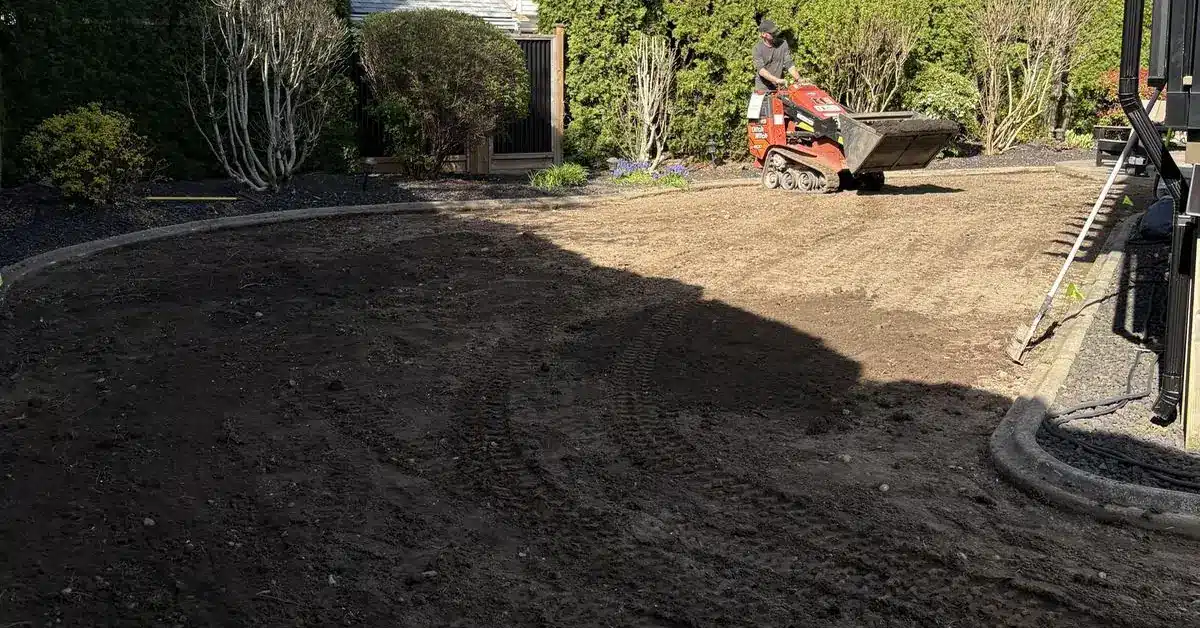
- Excavate to the needed depth, plus extra width past the edges.
- Compact the subgrade and shape it to the planned slope.
- Lay fabric or geogrid over the soil.
- Place and compact the base in layers.
- Screed the bedding layer, then lay the pavers.
- Install edge restraint, add jointing sand and compact the surface.
Walkways need the same care
A narrow path gets the same water and the same freeze-thaw as a patio. Our paver walkways are built with that in mind, from front entries to side-yard paths.
Think about the whole yard
Where does the roof water land? Which way does the lawn slope? A base that drains well can still struggle if a downspout empties right onto it.
Questions to ask before you pick your stone
Before you settle on colours and patterns, ask about what goes underneath.
- What kind of base will be used, and how thick?
- Will fabric or geogrid separate the base from the clay?
- How is each layer compacted?
- Where will water go once it drains through the base?
- What edge restraint holds the sides in place?
We have been working on Fraser Valley yards for 15+ years, from Promontory hillsides to wet lots on the valley floor. The patios that hold up best are the ones where the base got the most attention.
FAQ
Why do pavers sink in Chilliwack clay?
Heavy clay holds water. When rain soaks through the joints and the base cannot drain, the soil underneath softens and the layers above it settle, often at corners and low spots.
What is an open-graded aggregate base?
It is a base made from clean, angular crushed stone with the fine particles removed. The open gaps between stones let water drain through the base instead of sitting in it.
Is an open-graded base better than a traditional gravel base?
It depends on the site. Open-graded stone drains faster and is more forgiving in wet weather, but on clay it still needs fabric and a planned outlet for the water. Traditional bases with fines pack very firm but hold more moisture.
How deep should a paver base be?
It depends on the soil, slope and use. Driveways need a deeper base than patios or walkways, and soft or wet soils may need more. Manufacturer guides such as Unilock’s give typical depths as a starting point.
Do I need fabric under a paver base on clay?
On clay and silt, a filter fabric is usually a good idea. It stops fine soil from working up into the stone and clogging the base over time.
Planning a patio or walkway on heavy Chilliwack soil? Tell us about the yard, and we will talk through what should go under the stone before anything else.
Free on-site design consultation. Open 24/7. Call 604-807-4951