Table of Contents
- Seasonal Yard Work Checklist in Canada
- Essential Spring Yard Cleanup and Moss Management
- Summer Lawn Care and Weed Control Strategies
- Fall Aeration and Overseeding for a Healthy Lawn
- Winterizing Your Landscape and Irrigation Systems
- Crafting a Custom Seasonal Maintenance Calendar for Your Landscape
- Achieving a Beautiful Landscape Year-Round
Seasonal Yard Work Checklist in Canada
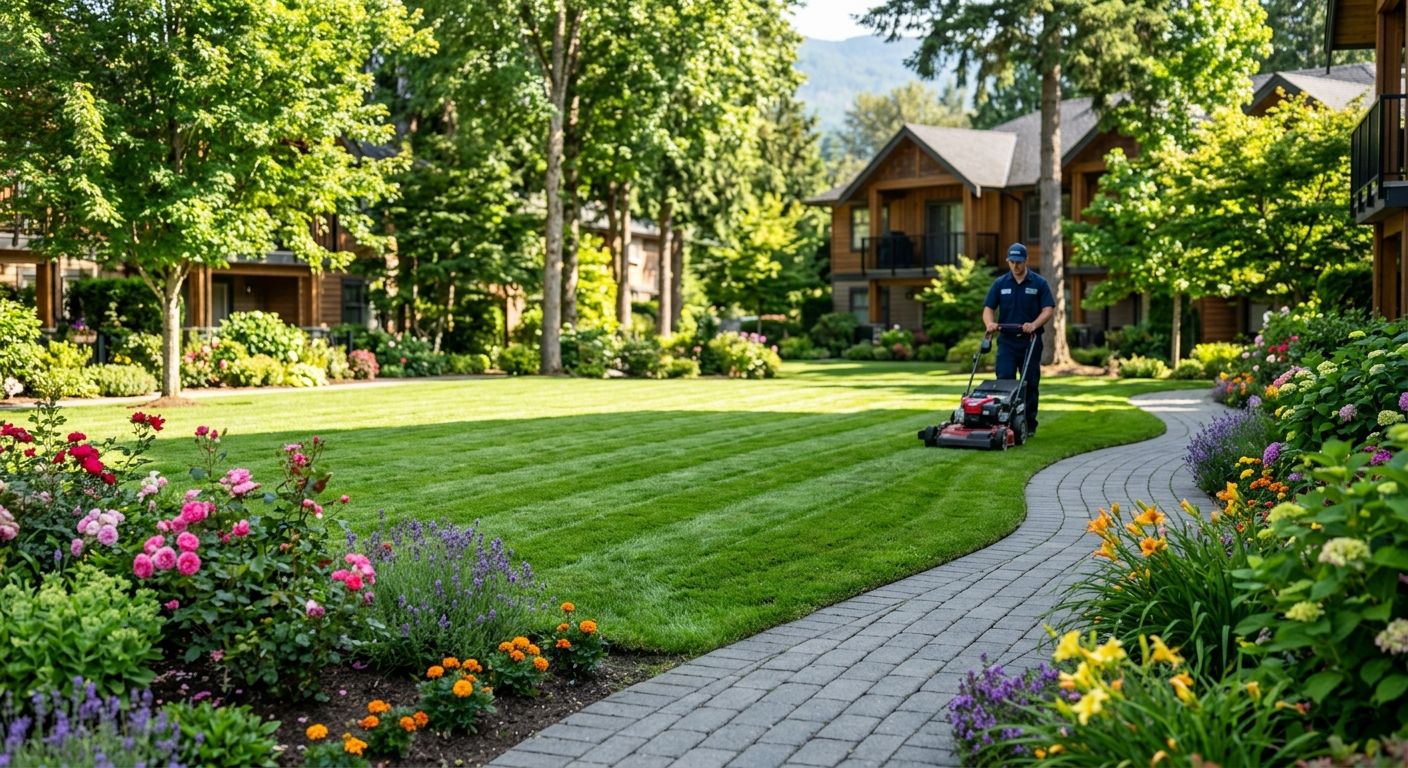
A seasonal yard work checklist that Canadian homeowners rely on simplifies year-round yard maintenance. Across the Fraser Valley, we experience everything from winter freeze–thaw cycles to summer heat, each season placing distinct demands on lawns, plantings, and hardscapes. A clear, seasonal approach keeps upkeep manageable and protects the long-term health of your landscape. Our own experience shows that dividing the year into spring cleanup, summer care, and fall preparation helps clients stay ahead of costly repairs. Spring, in particular, is the critical foundation: the time to clear winter debris, manage moss, and set the stage for healthy growth. Fall readiness, including aerating and preparing for snow, ensures landscapes bounce back quickly. We have refined these seasonal checkpoints to work for properties across the Lower Mainland, so your yard can stay vibrant year-round. Landscaping that makes your yard look effortlessly beautiful begins with a plan tailored to our unique climate.
Essential Spring Yard Cleanup and Moss Management
The seasonal yard work checklist we covered earlier leads directly into the hands-on tasks that bring your landscape back to life. As part of a seasonal yard work checklist in Canada, addressing debris and moss early gives your lawn the strongest possible start after winter’s long dormancy.
Raking is the first task in addressing debris. It removes branches, leaves, and other winter trash that mats down grass. This allows air and moisture to reach the soil and also positions the grass blades to be positively impacted by the sun. A rake or blower can be used to remove leaves and debris from lawns and beds. Once that is done, bed edges and lawns are much easier to assess for water buildup and compacted soil, which can lead to moss development.
In the Fraser Valley, moss thrives in the cool, damp, shaded spots in the yard as the snow melts. The goal is to remove moss in the spring, before summer heat arrives and moss growth slows, leaving behind bare, compacted soil that invites weeds. Moss thrives when the turf is thin and the ground stays wet, conditions that are common in many Canadian yards. Our process begins with evaluating the yard for problem areas with regards to moisture and light. Overhanging branches can be pruned to increase the yard’s light, and soil can be amended or aerated to promote drainage. Established moss should be raked out as a necessary first step, followed by overseeding to fill in the gaps and create a denser, more competitive lawn. This proactive sequence , clear, evaluate, then treat, ensures every action builds on the one before it, setting a solid foundation for the months ahead.
With the yard cleaned and moss under control, the lawn is primed for summer’s demands. Strong root development, uniform colour, and far fewer weed outbreaks become achievable goals. As the season shifts, our attention turns to the summer lawn care practices that build on this groundwork. For Fraser Valley homeowners, our spring cleanup and moss management services provide the expertise to transform winter-weary grounds into vibrant outdoor spaces. Let’s elevate your outdoor living, one season at a time.
Summer Lawn Care and Weed Control Strategies
After a thorough spring cleanup, the lush lawn you worked hard to restore now faces prolonged heat and aggressive weed pressure typical of a Fraser Valley summer. With a professional maintenance program, you can keep your turf healthy and resilient through these demanding months.
Weed control during the summer relies on proactive measures that stop weeds before they take hold. Common invaders like dandelions, crabgrass, and clover thrive in warm weather and can quickly outcompete your grass for water and nutrients. To keep these weeds in check, we recommend:
- Identifying and removing weeds early, before they flower and spread seeds.
- Maintaining a thick, dense lawn through proper mowing and watering so weeds have less room to establish.
- Applying pre-emergent treatments at the right time, without relying on reactive chemical sprays, to prevent weed seeds from germinating.
Integrated in our regular lawn care practices are techniques that dramatically reduce the weed population and promote overall grass health. When we take care of your property, we utilize these practices for the specific type of grass and soil on your property.
Equally important are the daily habits of watering and mowing. Raising mower blades during the hottest weeks encourages grass to grow deeper roots, which in turn withstands drought stress better. Watering practices also shift: deep, infrequent watering early in the morning targets the root zone while minimizing evaporation. Our team follows a fertilization schedule tailored to your grass type and local growing conditions, avoiding mid-summer stress and delivering nutrients exactly when your lawn can use them. Key tips include:
- Mow at a higher setting — never remove more than one-third of the blade at once.
- Water deeply but less often, applying about an inch per week in the early morning hours.
- Adjust fertilization to a summer-appropriate blend that supports root health without spurring excessive top growth.
By staying on top of these practices, you protect the root system and set the stage for fall renovations. A strong root network developed in summer means better recovery after aeration and overseeding, leading to a lush lawn that bounces back beautifully year after year. If you’d like season-by-season support, our maintenance plans offer tailored summer lawn care and weed control across the Lower Mainland.
Fall Aeration and Overseeding for a Healthy Lawn
As summer fades and the long days give way to cooler temperatures, the focus of lawn maintenance shifts from frequent mowing and weed control to strengthening the turf for the year ahead. Fall aeration and overseeding are among the most effective ways to repair summer stress and build a resilient, dense lawn that will survive winter dormancy and emerge stronger in spring.
Aeration involves removing small cores of soil from the lawn, a process that relieves compaction, opens up the root zone, and allows water, oxygen, and nutrients to penetrate more deeply. Lawns that receive heavy foot traffic, sit on dense clay soils, or develop a thick layer of thatch are prime candidates for this treatment. If water puddles on the surface after rain, soil compaction is likely slowing the lawn’s ability to develop deep, healthy roots. By creating thousands of small openings across the turf, aeration encourages roots to grow downward rather than staying shallow, leading to a more drought-tolerant and vigorous stand of grass.
Overseeding pairs naturally with aeration because the holes left behind give seed excellent contact with the soil, which dramatically improves germination rates. Spreading new grass seed over an existing lawn thickens thin areas, fills bare patches, and introduces improved turf varieties that can better withstand disease and wear. In our region, the ideal window for aeration and overseeding runs from late summer into early fall, when air temperatures are cooling but the soil remains warm. Under these conditions, grass seed germinates quickly and the young plants have weeks of moderate weather to establish a strong root system before the first hard freeze. Cooler temperatures also mean reduced competition from weeds, so the new grass gets the best possible start without constantly battling crabgrass and other summer invaders.
A thorough fall lawn care routine goes beyond keeping the grass tidy; it sets the stage for next year’s performance. With aeration reducing compaction and overseeding renewing the turf’s density, the lawn enters winter better equipped to withstand snow, ice, and freezing temperatures. When the grass finally goes dormant, it will do so with deeper roots and a thicker canopy—exactly what it needs to outpace weeds and greet spring in peak condition.
Winterizing Your Landscape and Irrigation Systems
The final step in your fall maintenance is to winterize your landscape. Winterizing your landscape is especially critical for those of us in the Fraser Valley, because during the extreme temperature changes of our winters, unprotected irrigation lines, plants, and hardscapes risk costly damage.
Prior to the soil freezing, you need to drain your irrigation system in order to protect it from the elements of a Canadian winter. The following are steps to preparing your system:
- Turn off the main water supply to the irrigation system and drain any remaining water from the lines.
- Use compressed air to blow out each zone, ensuring no moisture remains that could freeze and crack pipes or fittings.
- Drain and insulate backflow preventers and above-ground valves; in colder microclimates, wrap them with insulation sleeves.
- Shut down outdoor faucets and disconnect, drain, and store all garden hoses indoors to prevent freeze damage.
Your plants and hardscape features require similar preparation before snow arrives. Our plant protection routine includes:
- Apply a 5–8 cm layer of mulch around the base of trees, shrubs, and perennials to insulate roots and retain soil moisture.
- Wrap vulnerable young trees and shrubs with burlap or protective tree guards to shield them from snow load and desiccating winter winds.
- Clear debris from paver patios, walkways, and steps, then apply a penetrating sealer before freeze-thaw cycles begin; use calcium chloride or sand-based ice melt rather than rock salt, which erodes pavers and harms nearby plants.
- Stake and gently clear heavy snow from the branches of young or top-heavy evergreens to prevent breakage.
Walking on frozen turf can crush grass crowns and invite spring disease, so we advise staying off the lawn entirely once frost sets in. At Hughes Landscaping Services, our plant protection and hardscape winterization goes beyond the checklist. We blow out irrigation lines, drain valves, protect backflow preventers, and inspect hardscapes for vulnerable areas. All of this is part of our professional landscape services throughout the Lower Mainland. This proactive approach extends the life of your irrigation system and hardscape investment.
Keeping a calendar with time sensitive tasks helps create a year-round routine. Including winterization on your maintenance calendar ensures no protective step is missed and that every season’s efforts , from fall aeration to winter shut-down, flow together seamlessly.
Crafting a Custom Seasonal Maintenance Calendar for Your Landscape
A custom seasonal maintenance calendar provides an advantage to homeowners by organizing every lawn care and landscape activity for the year, and anticipating seasonal changes. You can protect your investment and avoid last minute rush activities. For homeowners in the Fraser Valley and other Canadian Climate Zones, the first step to developing your maintenance calendar is to add the average first and last frost dates. Next, you can group similar seasonal activities.
In spring, after the ground thaws, your calendar should include a major clean-up of the landscape to remove all winter debris and edging of landscape beds to prepare for new growth. Combine this with an early-season fertilization that gives turf and plants a strong start.
During the growing season, regular mowing and targeted weed control are required to keep the lawn thick and healthy. From a lawn care maintenance perspective, in our residential maintenance programs we adjust mowing height, fertilizer blends, and weed management timing to match the changing conditions.
Fall leaf cleanup should be a priority, because heavy leaf cover can lead to lawn suffocation and disease. Fall is also the time to implement a fertilizer to promote root growth and to winterize the irrigation systems and other outdoor water features. During the off season, you should also consider scheduling preventative maintenance on your lawn care equipment and review your spring plan to stay ahead of your project goals.
We factor in the unique qualities of each property when creating a maintenance plan, because no two properties are the same. Soil type affects how often you need to water, sun exposure determines how quickly the lawn dries out, and the type of irrigation system influences scheduling. Our team takes into account all of these factors when building a maintenance plan to help ensure that every task happens at the right time for the conditions on your site.
An effectively designed maintenance calendar eliminates guesswork, prevents missed seasonal tasks, and keeps your landscape looking its best from the first signs of spring to the quiet of winter. We take a proactive approach for our clients. It allows us to save time and money on lawn care for our clients while ensuring their landscape is protected and cared for all year long.
Achieving a Beautiful Landscape Year-Round
A landscape’s beauty is not achieved by accident—it’s the reward of thoughtful, season-by-season care. A custom seasonal maintenance calendar transforms scattered chores into a clear, manageable plan that keeps your property healthy, vibrant, and ready for whatever Canadian weather brings. From winter snow loads to the spring thaw and summer heat, consistent upkeep protects your curb appeal, nurtures plant life, and extends the life of your investment. Because every property has unique conditions and a distinct microclimate, we tailor the calendar to match your landscape’s exact needs, ensuring that pruning, aeration, and snow removal happen at the right time. We would be pleased to help you build a maintenance schedule that fits your property and lifestyle. Reach out to our team in the Fraser Valley, and let’s make a beautiful landscape your everyday reality, year-round.
Start Your Seasonal Maintenance Plan
Now that you have a complete seasonal yard work checklist covering spring cleanup, moss management, summer weed control, fall aeration, and winterizing, you can see that a beautiful Canadian landscape requires year-round effort. Instead of managing these tasks on your own, let a local expert turn a custom maintenance calendar into a seamless, worry-free routine. Hughes Landscaping Services delivers comprehensive residential landscape maintenance throughout the Fraser Valley, British Columbia, with everything from regular mowing and weeding to seasonal cleanups and fertilization. We even guarantee your lawn will improve in one season when you follow our professional care plan. Call 604-807-4951 today for a free on-site consultation and let us build the perfect seasonal schedule for your property. With the right support, your outdoor space can stay vibrant and inviting through every Canadian season.