

Artificial Grass Near Me
Table of Contents
Artificial Grass Solutions for Vancouver and Fraser Valley Homes
In the rainy Lower Mainland, homeowners are searching for artificial grass near me in the Lower Mainland and Fraser Valley to create vibrant, low-maintenance outdoor spaces. With British Columbia’s water restrictions pushing a shift from traditional lawns, artificial turf offers a sustainable alternative that thrives despite heavy rainfall and mild winters. This guide explores how these solutions transform backyards into lush retreats year-round.
Common applications include family-friendly play areas, elegant patios, and eco-conscious front yards, all benefiting from the durability of high-quality fake turf options nearby. Products like those from SGC Products, featuring UV resistance for Canadian climates, ensure lasting green aesthetics without constant upkeep. For seamless Artificial Grass Langley or installations in Abbotsford, Chilliwack, and Vancouver, artificial turf installation by experts like Hughes Landscaping handles site prep to delivery. Year-round vibrancy saves time and water, addressing local weather challenges effectively.
Curious about synthetic grass cost or synthetic lawn pricing in BC? Average ranges per square foot vary with material quality and terrain, influenced by regional factors like drainage needs. Upcoming sections cover installation details, cost breakdowns, and best practices to help you get a free quote from local pros for your ideal setup.
Key Components of Artificial Grass Systems
Artificial grass systems offer a durable, low-maintenance alternative to natural lawns, especially in the rainy Lower Mainland where traditional turf struggles with mud and poor drainage. These systems consist of layered components designed for longevity, mimicking the look and feel of real grass while withstanding BC’s variable weather. Professional installers in Vancouver emphasize quality materials to ensure performance over time, reducing water usage and upkeep costs. Understanding these elements helps homeowners in the Fraser Valley make informed choices for their outdoor spaces.
Materials and Construction Basics
The foundation of any artificial grass starts with its blades and backing, crafted to replicate natural grass aesthetics. Polyethylene blades dominate for their softness and realistic appearance, available in straight or curly styles. Straight blades provide a uniform, carpet-like finish ideal for residential lawns, while curly ones add texture and better mimic Bermuda grass varieties common in drier regions. Both types feature UV stabilizers to resist fading during BC summers, where temperatures can hit 30°C in the Fraser Valley.
The polyurethane or latex backing secures the blades in place, preventing shifts and weed intrusion through perforated designs that allow water passage. This construction not only enhances durability against local moisture but also supports easy cleaning. For those searching for artificial grass near me in the Lower Mainland and Fraser Valley, opting for high-grade materials influences synthetic grass cost, with premium polyethylene adding to turf system pricing factors but delivering better value through extended lifespan. Faux lawn components like these ensure a vibrant green hue year-round, even on shaded patios in Chilliwack.
Infill Types for Durability and Drainage
Infill materials fill the spaces between blades, providing crucial support and functionality in artificial grass setups. Silica sand offers a cost-effective option, weighing down the turf to keep blades upright while permitting excellent water permeability–essential for the heavy rains in the Fraser Valley. Rubber infill, often from recycled tires, adds cushioning and resilience, reducing joint impact by 20% as noted in infill guides, making it suitable for playgrounds and sports areas in Abbotsford.
Organic alternatives like coconut fiber provide eco-friendly drainage and natural cooling, though they may require more frequent top-ups in pet-heavy homes. For pet owners, antimicrobial infills prevent odors and bacterial growth. In Langley, options like Artificial Grass for Dogs Langley cater to these needs, ensuring safe play surfaces. Infill acts as the turf’s backbone, enhancing stability and temperature regulation by up to 30% in hot weather.
Quick comparison of infill types:
- Silica Sand: Affordable, superior drainage for rainy climates; best for low-traffic lawns.
- Rubber Crumb: Shock absorption for sports; adds bounce but can retain heat.
- Organic Coir: Eco-biodegradable, pet-safe; moderate support with natural aesthetics.
These choices address questions on infill benefits for various uses, like pet areas where rubber excels in durability.
Base Preparation Essentials
A stable base is critical for artificial grass longevity, particularly on the uneven terrains common in Chilliwack’s sloped yards. Installation begins with excavating 3-4 inches of soil, followed by layers of crushed rock for drainage and compaction to prevent shifting. Geotextile fabric acts as a weed barrier, separating the base from the turf while allowing water to percolate through–vital for BC’s wet conditions.
For installations over concrete or existing decks, additional shock pads provide cushioning, though precautions like edge securing are needed to avoid movement. In areas with poor soil, like clay-heavy Vancouver lots, extra gravel ensures stability. Artificial turf installation professionals recommend laser leveling for even surfaces, especially in large areas where seaming tapes join rolls seamlessly with adhesives.
This preparation prevents water pooling and erosion, adapting to local challenges such as heavy downpours. Proper base work ties into overall costs, with breakdowns showing how site specifics in Canada affect pricing–from $8 to $15 per square foot including labor.
Selecting these components with regional expertise, like from Langley installers, guarantees a resilient faux lawn that thrives in the Lower Mainland’s climate, delivering years of enjoyable outdoor living.
Advantages of Switching to Artificial Turf Locally
Switching to artificial turf in the Vancouver-Hope corridor offers homeowners significant lifestyle upgrades, particularly in a region prone to heavy rains and water restrictions. This low-maintenance alternative to natural grass aligns perfectly with British Columbia’s environmental priorities and busy family schedules, delivering both immediate and long-term value through reduced effort and costs.
Water and Maintenance Savings in BC
In areas like Vancouver, where water conservation is a key concern during dry spells, artificial grass near me in the Lower Mainland and Fraser Valley stands out for its zero-watering requirement. Traditional lawns demand up to 75% more water annually, but synthetic options eliminate this need, saving families hundreds of dollars yearly amid rising utility bills. Maintenance drops dramatically too; forget weekly mowing and fertilizing–instead, occasional brushing and rinsing suffice, cutting labor by over 50% as per Canadian industry averages.
This shift not only conserves resources but also frees up weekends for enjoyment rather than yard work. For instance, a Langley resident shared, “Since installing faux turf benefits, our water bill halved, and the kids play freely without muddy patches after rain.” Annual upkeep for natural grass can hit $500 or more, while artificial versions offer synthetic lawn value in BC through one-time investments that pay off quickly.
- Water Reduction: Up to 75% less usage, supporting local conservation efforts.
- Time Savings: No mowing, weeding, or seasonal overseeding.
- Cost Efficiency: Average maintenance drops from $12-18 per square foot over time.
Durability Against Regional Weather
British Columbia’s Fraser Valley humidity and frequent downpours challenge natural lawns, leading to mold, pests, and erosion, especially in family yards with heavy foot traffic. Artificial turf installation provides superior resistance, crafted from UV-stabilized materials that withstand wet winters without rotting or fading. Unlike sod that dies off in soggy conditions, synthetic turf lasts 10-15 years, enduring everything from Abbotsford’s damp climate to Vancouver’s urban wear.
Property managers in Chilliwack praise its pest-proof design, noting fewer ant infestations and no need for chemical treatments. This durability translates to fewer repairs and a consistently lush surface year-round. A Chilliwack homeowner testimonial highlights, “Our artificial turf handles the rain and kids’ games without a hitch–it’s transformed our backyard oasis.”
Compared to natural grass:
- Pros of Artificial: Mold-resistant, no pesticides, holds up to 20,000 pounds per square inch.
- Cons: Initial investment higher, though offset by longevity.
- Natural Drawbacks: Prone to winter die-off, requiring $300+ in spring revival.
Aesthetic and Versatility Enhancements
Artificial grass enhances curb appeal in Hope-area homes with its evergreen vibrancy, unaffected by seasonal changes or shade from coastal trees. Custom designs allow integration into patios, play zones, or sloped terrains common in Chilliwack, creating seamless outdoor spaces for barbecues or relaxation. The synthetic grass cost, averaging $12-18 per square foot installed, delivers strong ROI through increased property value and usable square footage.
Versatility shines in urban Vancouver settings, where space is tight–faux turf fits balconies or rooftop gardens without soil compaction issues. Families in Abbotsford appreciate play-safe surfaces that reduce injury risks from uneven natural ground. One testimonial reads, “The year-round green has made our patio a true extension of the home, perfect for gatherings.”
- Year-Round Appeal: Maintains color through BC’s variable weather.
- Custom Fit: Ideal for patios, slopes, or high-traffic play areas.
- Eco Boost: Less chemical runoff, supporting local green initiatives.
These benefits tie directly to regional needs, making artificial turf a smart choice for sustainable, enjoyable living in the Lower Mainland.
Step-by-Step Artificial Grass Installation Process
Installing artificial grass transforms outdoor spaces into low-maintenance havens, especially for busy Lower Mainland homeowners. This guide outlines the key steps for a durable setup, adaptable to Vancouver’s rainy climate and urban surfaces like concrete patios or decks. Whether tackling a DIY project or hiring pros, following these steps ensures optimal drainage and longevity.
Site Preparation and Removal
Begin your artificial turf installation by measuring the area precisely and marking boundaries with stakes and string. For properties in the Lower Mainland, where clay soils dominate, excavate existing sod or grass to a depth of 3-4 inches to allow for proper base layering. Remove all debris, roots, and rocks to create a smooth surface, preventing uneven settling over time.
Next, level the ground using a rake and tamper, aiming for a gentle 1-2% slope away from structures to facilitate water runoff during British Columbia’s frequent rains. If installing over existing grass, thoroughly remove it to avoid decomposition issues; for concrete or decking, ensure the surface is clean and stable, as freeze-thaw cycles can cause cracks. Safety tip: Wear gloves and eye protection when handling sharp tools. Searching for artificial grass near me in the Lower Mainland and Fraser Valley often leads to local suppliers who recommend permeable weed barriers for added soil protection. This prep phase sets the foundation for a seamless faux grass setup, typically costing $200-500 in tools and materials depending on yard size.
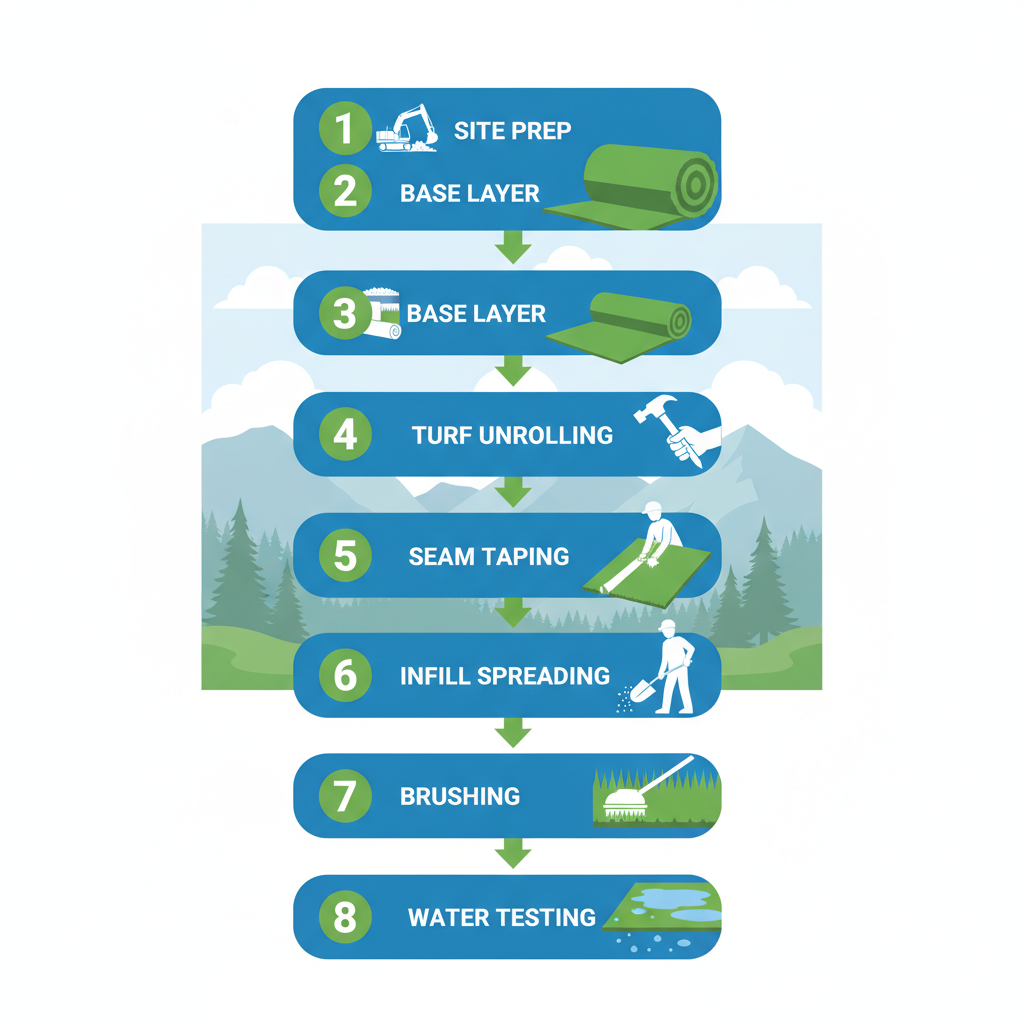
Step-by-step artificial grass installation process visualization
The visualization above highlights how site prep integrates with subsequent layers, emphasizing regional adaptations like enhanced drainage for wet winters. Proper preparation not only extends turf life but also aligns with DIY artificial turf installation tips for cost-effective results.
Laying Base and Turf
Once the site is ready, lay down a geotextile fabric to suppress weeds, then add a 2-3 inch layer of crushed gravel or decomposed granite for stability and drainage. Compact the base thoroughly with a plate compactor, checking the slope to ensure efficient water flow–essential for sloped areas in Chilliwack or Abbotsford.
For the turf laying guide, roll out the artificial grass perpendicular to any seams, allowing it to acclimate in the sun for a few hours to avoid shrinking. Trim excess edges with a utility knife for a custom fit, especially around obstacles like trees or patios. Secure the perimeter using landscape nails every 6-8 inches or adhesive for concrete installs, where anchoring prevents shifts on hard surfaces.
This stage balances DIY feasibility with professional input; for complex sites, consult Hughes Landscaping experts to handle uneven terrain. Synthetic grass cost here includes $1-2 per square foot for gravel, keeping total faux grass setup expenses manageable at $5,000-10,000 for average yards.
Essential tools for this phase are outlined below:
| Tool | Purpose |
|---|---|
| Shovel and rake | Excavation and leveling |
| Plate compactor | Base compaction |
| Utility knife | Turf trimming |
| Landscape nails or adhesive | Securing edges |
| Measuring tape | Accurate sizing |
These tools ensure a solid base, transitioning smoothly to finishing touches that enhance durability in high-traffic Fraser Valley yards.
Compacting the base properly not only supports the turf but also minimizes long-term maintenance, a key consideration for rainy regions.
Finishing with Infill and Seaming
Apply infill material like silica sand or rubber granules gradually with a spreader, brushing it into the turf fibers using a power broom to stand blades upright. For seamless looks, tape and glue seams with outdoor adhesive, pressing firmly to avoid visible lines–crucial for expansive lawns in Langley.
Brush the surface vigorously after infill to distribute evenly, then test water flow by hosing down the area; excess pooling indicates drainage adjustments needed for BC’s wet weather. Safety note: Use dust masks during infill application to avoid inhalation. This final step completes the artificial turf installation, promoting a natural appearance and resilience against foot traffic.
Post-install, sweep regularly and rinse occasionally to maintain vibrancy, extending to best practices like seasonal inspections for urban renovations.
Maintenance and Optimization Tips for Longevity
Maintaining artificial grass ensures it remains vibrant and functional for years, especially in the rainy Lower Mainland and Fraser Valley. Simple turf upkeep strategies can prevent common issues like matting and drainage problems, saving on faux lawn care expenses over time. After artificial turf installation, homeowners in areas like Langley and Chilliwack benefit from consistent care routines tailored to British Columbia’s climate.
Routine Cleaning in Wet Climates
In the humid Fraser Valley, routine cleaning prevents moss and algae buildup on artificial grass near me in the Lower Mainland and Fraser Valley. Start with weekly debris removal using a leaf blower to clear leaves, twigs, and pollen that accumulate after storms. For heavier usage, such as in pet-friendly yards, increase frequency to twice weekly to avoid compaction.
Next, rinse the surface biweekly with a garden hose to flush out dirt and neutralize pet urine, which can cause odors if left untreated. Use a mild vinegar solution for stubborn spots, ensuring thorough drainage to mimic natural rainfall patterns. Neglecting these steps can lead to pooling water and slippery surfaces, as seen in some Abbotsford properties during prolonged wet spells.
Checklist for cleaning:
- Weekly: Blow off debris and inspect for wear.
- Biweekly: Hose rinse and spot-treat urine.
- Monthly: Gentle brush to lift fibers.
These habits keep the turf looking fresh and extend its life, reducing long-term synthetic grass cost by minimizing replacement needs.
Infill Refresh and Repairs
Infill plays a crucial role in artificial grass performance, providing stability, drainage, and cooling in Vancouver’s variable weather. It supports the blades, prevents shifting, and wicks away moisture, which is essential in BC’s frequent rains. Annual refreshment maintains these benefits, avoiding compaction that leads to uneven surfaces.
For infill top-ups, add 1-2 pounds per square foot yearly, using silica sand or organic options suited to local humidity. In Vancouver summers, incorporate UV-protectant materials during seams checks to shield against intense sun in spots like Abbotsford. Inspect seams quarterly for wear, applying repair kits with adhesive for minor tears; schedule professional servicing every two to three years for thorough assessments.
Post-installation, groom infill monthly with a stiff brush to redistribute it evenly. This prevents matting and ensures optimal drainage, particularly after heavy use.
The following table offers a quick reference for infill types and their upkeep needs in Canadian conditions, drawing from regional adaptation guides.
| Infill Type | Benefits | Maintenance Frequency | Local Suitability (BC) |
|---|---|---|---|
| Silica Sand | Cost-effective drainage; Supports blades, basic cooling | Quarterly brushing | Good for mild rains (High) |
| Rubber Crumb | Shock absorption; Pet-friendly, heat reduction | Bi-annual top-up | Ideal for play areas (Medium) |
| Organic Coir | Eco-friendly; Natural cooling, antimicrobial | Monthly rinse | Suits wet winters (Excellent) |
Selecting the right infill depends on yard use; for example, organic coir excels in wet winters for its antimicrobial properties, while rubber crumb suits active family areas. In Fraser Valley homes, these choices can cut maintenance time by up to 30 percent, per Canadian supplier data, enhancing overall value.
Beyond infill, address repairs promptly to avoid escalation. For UV protection, apply sprays biannually in sunny exposures, consulting Langley experts for custom advice.
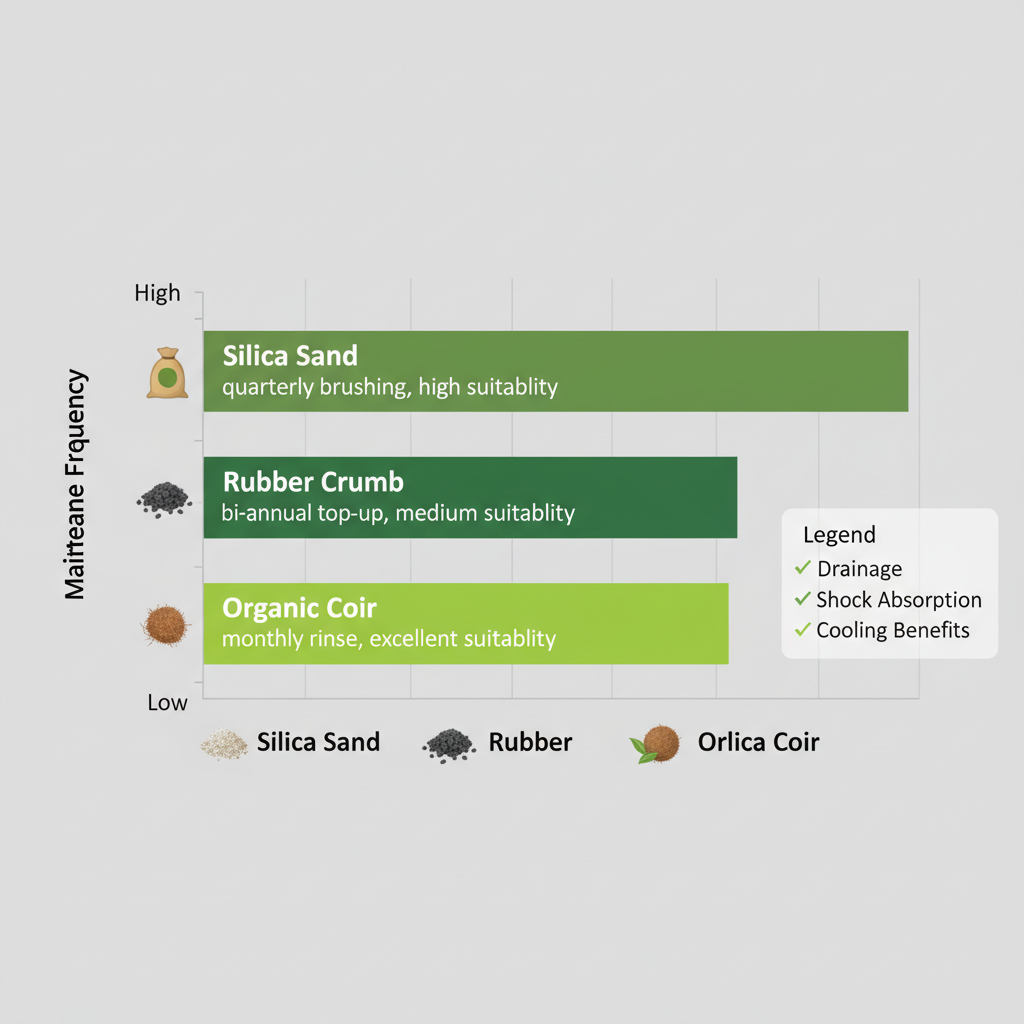
Infill maintenance comparison for artificial grass in Fraser Valley conditions
This visual highlights how organic coir requires more frequent but simpler care, aligning with BC’s precipitation patterns. Transitioning to broader precautions, these insights inform year-round strategies.
Climate-Specific Precautions
British Columbia’s variable weather demands targeted precautions to extend artificial turf life. Avoid winter salting on the surface, as salts can degrade fibers; instead, clear snow gently with plastic shovels to prevent scratches.
In spring, aerate the base layer to improve drainage after freeze-thaw cycles common from Vancouver to Hope. Perform seasonal inspections for clogs in perimeter drains, especially post-rainy season, to avoid waterlogging that shortens turf lifespan.
For summer heat, shade high-traffic areas and refresh infill to combat compaction. These steps mitigate risks like fiber fading or base erosion, ensuring resilience against regional extremes.
Checklist for precautions:
- Winter: No salts, gentle snow removal.
- Spring: Aerate and check drainage.
- Summer: Shade and infill refresh.
By adopting these practices, property owners reduce synthetic grass cost through longevity, often saving 20-40 percent on total ownership compared to neglected lawns, as noted in cost analyses.
Ready to Transform Your Outdoor Space Today
Artificial grass offers Vancouver-area homeowners a smart, sustainable upgrade that’s perfect for the region’s damp weather. With low-maintenance benefits like no mowing or watering, it’s ideal for busy lifestyles in the Lower Mainland. Searching for artificial grass near me in the Lower Mainland and Fraser Valley? Local turf upgrades from Hughes Landscaping deliver durable options for Canadian outdoors, ensuring year-round appeal without the hassle of natural lawns. At an average synthetic grass cost of $10-20 per square foot installed in British Columbia, it’s a cost-effective choice that boosts property value while addressing common concerns like infill choices for stability and the superiority of professional installation over DIY to avoid costly errors.
Key takeaways include its versatility for installation on concrete or decks, where success rates exceed 95% with proper techniques, making nearby synthetic solutions accessible for patios, rooftops, or sloped yards. This addresses queries on synthetic grass installation prices in British Columbia and affordable options near you, emphasizing how pro services ensure longevity in rainy climates.
Ready for your artificial turf installation? Contact Hughes Landscaping today for a free onsite assessment in Langley, Abbotsford, or anywhere from Vancouver to Chilliwack. We’ll provide tailored quotes factoring in your synthetic grass cost and space needs, with quick regional response times. Call us at our local number or email for immediate action–transform your outdoor space effortlessly!
Hughes Landscaping made our backyard dream a reality with their expert turf work. It’s low-maintenance perfection! – Satisfied Fraser Valley Client


